

Design Thinking Workshops for Banks: Why They Matter in the AI Era


TL;DR
AI made building cheap, so the expensive mistake became building the wrong thing at speed. A design thinking workshop is where a team agrees on the problem before spending a quarter on the solution — 89% of executives say AI sped up their work, while only 6% can point to returns from it.
What Decides Whether a Workshop Pays Back:
- The right format — one business decision, or a shared way of deciding across teams
- Preparation that separates real constraints from assumed ones
- Real users in the validation loop, however fast AI makes the rest
- Product, design, engineering, compliance, and someone who spoke to customers recently
What You’ll Take Away: whether a workshop fits your team right now, and what it can change for your product, your roadmap, and your customers.
The design thinking workshop has been part of product practice for more than a decade, long enough for many leaders to file it under familiar rituals. That familiarity hides how much its value has changed. AI has made building cheap, which turns the decision about what to build into the most expensive one a product team makes.
In banking and FinTech that decision is already crowded by compliance, security and legacy systems, so the stakes are higher than in most industries. In this article, we look at why a design thinking workshop matters more for financial products today, where it pays back, and when it is the wrong call.
Why Does a Design Thinking Workshop Matter More Today?
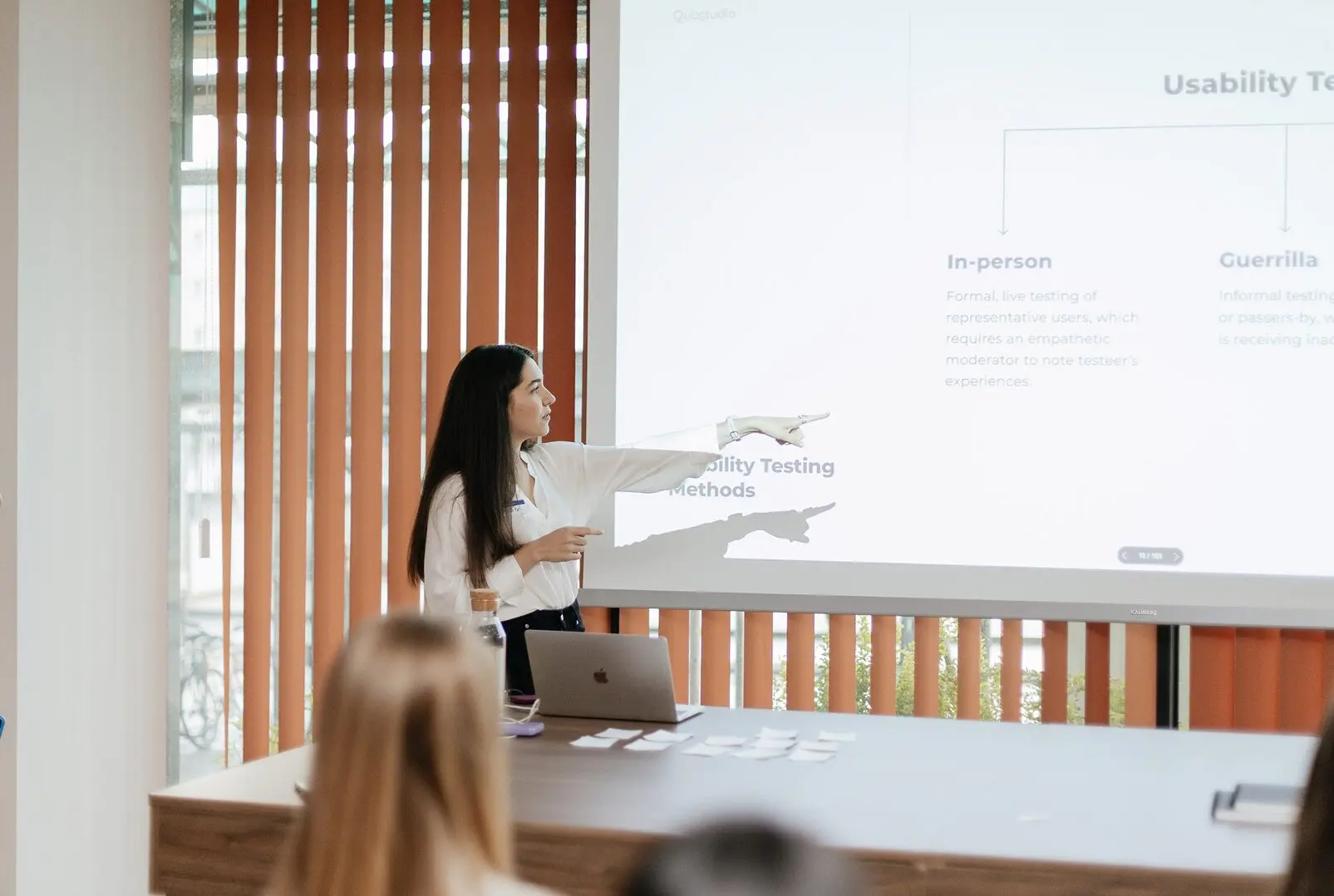
A design thinking workshop is a facilitated session where product, design, engineering and business stakeholders work through one problem from the user’s perspective, from research to a tested prototype. Its value has shifted, because speed stopped being the bottleneck in product work and judgment about what deserves to be built took its place.
Atlassian’s State of Teams 2026 found that 89% of executives say AI has increased the speed of work. Only 6% feel confident they can point to organisation-wide returns from it.
- What AI accelerated: research synthesis, idea generation, prototyping and delivery.
- What AI left untouched: agreeing which problem is worth solving, and proving the answer with real users.

A workshop sits exactly in that second gap. It is the point where a team agrees on the problem before it spends a sprint, or a quarter, building a solution. In financial services that gap is wider than anywhere else, for a structural reason.
Why Is Design Thinking Especially Critical for FinTech and Banking Products?
Every decision in a financial product answers to several parties at once, and each of them can be right:
- The customer wants speed and clarity.
- The business wants conversion and cross-sell.
- Engineering works around legacy core systems.
- Security wants fewer attack surfaces.
- Compliance and regulators want evidence for every step.


The cost of getting this wrong is measurable. Fenergo’s Financial Crime Industry Trends 2025, a survey of 600 senior decision-makers in the UK, US and Singapore, found that 70% of institutions lost clients through inefficient onboarding, the highest level recorded. Over the same period, use of advanced AI in KYC and AML rose from 42% to 82%.

More technology did not keep customers. The gap sits in how banks decide what to build, and that decision is what a workshop is for. The method itself and its five phases are covered in our guide to design thinking in FinTech.
Where Do Digital Experiences in Financial Services Start to Fragment?
Onboarding is the clearest example of a wider pattern. Customers never see the org chart behind a journey. They see one bank.
- The ad and the landing page belong to marketing.
- The app flow belongs to product.
- The identity check is run by a third-party vendor.
- The verification email and the support chat belong to operations.

Each surface is approved in a different meeting against a different constraint. Every decision can be locally correct while the customer meets the sum of them, and the sum is where they abandon.

This is why we treat a workshop as part of experience strategy. Its value lies in giving product, brand, compliance and engineering one shared definition of the problem. We explain how that alignment works across brand and product in our article on brand experience design.
Can AI Replace User Research in the Design Thinking Process?
The obvious objection in 2026 is that AI can now do much of this work. It can prepare, synthesise and prototype faster than any team. It cannot tell you which hypothesis is true.

Nielsen Norman Group tested a synthetic-user platform against three studies already run with real participants:
- Synthetic responses were too shallow to be useful for many research activities.
- Synthetic users were sycophantic, praising concepts that real participants questioned or rejected.
For a bank the second finding is the costly one. Customers drop out of identity checks for reasons they rarely say out loud: distrust about where a passport scan goes, a missing document, an assumption they will be refused anyway. A model trained on agreeable text will not surface any of that.
The useful division is simple. AI widens the hypothesis space and shortens the build. People decide which question matters and whether the answer is real, and that depends on how the workshop itself is set up.
What Makes a Design Thinking Workshop Worth the Investment for Financial Teams?
Three choices decide the outcome, and all of them are made before the session starts.
- The right format. An educational workshop builds a shared way of making decisions across teams. A problem-solving workshop resolves one specific business question and ends with hypotheses, priorities and a validation plan.
- Real preparation. Stakeholder interviews, a defined problem, an agreed outcome, and a check on which constraints are genuinely fixed.
- The right people in the room. Product, design, engineering, compliance, and someone who has spoken to customers recently.


For banks the educational format is often the higher-leverage choice, because it changes the default question asked in hundreds of small decisions that will never justify their own session.
When Should a Financial Organisation Skip the Design Thinking Workshop?
A workshop is the wrong call when there is no uncertainty left to explore.

The signals that you do need one are just as specific:
- Your team describes the problem differently depending on who is speaking.
- Decisions come from the business or technology seat, and the user has dropped out of the conversation.
- Roadmaps say “users want” with no research behind it.
- Discussion has run for weeks without converging.

Run a workshop without real uncertainty and you get an expensive alignment ritual. Run one where these signals are present and it is usually the cheapest week on the roadmap.
Conclusion
Today a design thinking workshop matters for one reason. AI made building fast, and financial products pay the highest price for building the wrong thing fast.
Banks and FinTechs feel this first because every decision answers to several parties at once. A well-prepared workshop gives those parties one shared problem, keeps real users in the validation loop, and stops the experience from splitting at the seams between teams.
Over 19 years and more than 700 projects, Qubstudio has worked with retail banks, corporate banking teams and FinTech companies across the US, GCC and Europe. We run workshops as part of experience strategy, so the decisions made in the room carry through to product, brand and platforms.
Let's Plan Your Design Thinking Workshop
FAQ
What is a design thinking workshop, and why does it matter more in 2026?
A design thinking workshop is a facilitated session where product, design, engineering and business stakeholders work through one problem from the user’s perspective, from research to a tested prototype.
AI made delivery fast, so judgment about what to build is now the bottleneck. Atlassian’s State of Teams 2026 found that 89% of executives say AI sped up their work, yet only 6% can point to organisation-wide returns. A workshop lets a team agree on the problem before it spends a sprint on a solution.
Why do banks and FinTech companies need design thinking workshops?
Every decision in a financial product answers to the customer, the business, engineering, security and compliance at once. A decision that is right from one seat can create a problem in another. A workshop puts all five perspectives on one table.
The cost shows up in onboarding. Fenergo’s 2025 report found that 70% of institutions lost clients through inefficient onboarding, the highest level recorded. Customers never see the org chart. They meet the sum of every team’s decisions.
What types of design thinking workshops exist, and how should a financial team prepare?
An educational workshop builds a shared way of making decisions across teams. A problem-solving workshop resolves one business question and ends with hypotheses, priorities and a validation plan. For banks, the educational format often has higher leverage, because it changes the default question behind hundreds of small decisions.
Preparation decides most of the value:
- Stakeholder interviews and a defined problem
- An agreed outcome
- A check on which constraints are truly fixed
- Product, design, engineering, compliance and someone who has recently spoken to customers
How do you know if your team needs a design thinking workshop?
A workshop pays back when real uncertainty remains. Look for these signals:
- The team describes the problem differently depending on who speaks.
- The user has dropped out of decisions.
- Roadmaps say “users want” with no research behind it.
- Discussion has run for weeks without converging.
If the problem and solution are already clear, skip it. Without uncertainty, a workshop is an expensive alignment ritual.
Can AI replace user research in a design thinking workshop?
AI can list five plausible reasons why a user abandons KYC. It cannot say which one is real.
Nielsen Norman Group tested a synthetic-user platform against three studies with real participants. The responses were too shallow, and the synthetic users praised concepts that real participants rejected. For a bank, that matters, because customers leave identity checks for reasons they rarely say out loud. Validation still needs real customers.